Why Some Music Fails in Film — and How Spatial Sound Design Solves It
A White Paper on Groove Healing Sound for Sync Licensing · ONTSUBU LLC
Most sync music is chosen for mood. Ikuyi Minat designs for alignment — matching the spatial acoustic signature of every scene at a cellular level. This paper presents the science behind the problem, the framework behind the solution, and the catalog behind the music.
01 — The Problem
Three Layers of Misalignment in Film Sound
When a film fails to stay with an audience after the credits roll, sound is rarely examined as the cause. Yet the gap between a scene that resonates deeply and one that merely entertains often comes down to a single, overlooked variable: acoustic alignment.
Inside every piece of footage exist sounds that cannot be changed — the grain in an actor's voice, the ambient reverb of a narrow hallway, the dry crack of footsteps on concrete. These are fixed. And when the music layered over them operates in a different acoustic space, the brain detects the mismatch. Not consciously. But the emotion fails to consolidate. The scene passes. The audience moves on.
The misalignment operates across three distinct layers.
Layer 1 — Acoustic Misalignment
Example of Alignment: The Harry Potter Series
The stone architecture of Hogwarts Castle is, from an acoustic design perspective, a laboratory. Stone reflects the mid-low frequency range (200–800Hz) strongly, and high ceilings with hard walls create long reverb tails of 1.5–2.5 seconds. John Williams's original score aligns precisely with this signature. In the Great Hall, full string arrangements with long reverb tails; in narrow corridors, the closeness of muted strings; in outdoor dueling scenes, brass and percussion — each visual space is followed by its sound.
Furthermore, the vocal range of the male lead cast concentrates in the mid-low frequencies, resonating in the same acoustic band as the strings' main melody. The brain judges that 'the voice of a person in this space' and 'the music playing in this space' come from the same physical world. Immersion is achieved.
▼ Figure 1: Alignment Comparison (Frequency Band · Reverb Time · Decay Pattern · Vocal Range)
Frequency Distribution
Reverb Decay Curve
Alignment Score: Strings × Stone — High alignment ✓ · Synth × Stone — Low alignment ✗ · Male vocal range × Strings — Resonance ✓
In contrast — common misalignment patterns:
Using modern synthesizer-based music against historic stone or wood architecture. Synth frequency distributions tend to concentrate in ultra-low (20–60Hz) and high ranges (6kHz+), diverging from the mid-low frequencies that stone naturally amplifies.
Placing a heavy, bass-dominant score over scenes where a female actor leads. The female vocal range (roughly 300–1000Hz) and low-dominant music (80–200Hz) operate in separate frequency bands — giving the brain the impression that voice and music do not share the same space.
Using music with vast reverb over a conversation scene in a small room. Conversely, simply foregrounding the actor's breath slightly is enough for the brain to instantly register "a small space," making the acoustic mismatch far less noticeable — the spatial anchor of hearing kicks in.
Layer 2 — Emotional Misalignment
Emotion is innate and universal
Paul Ekman's research (1992) demonstrated that the six basic emotions — joy, sadness, anger, fear, disgust, and surprise — are biologically innate. They emerge within the first year of life, and the same expressions appear in infants born blind. Developmental psychology research shows that infants begin distinguishing different emotions at 4 months, expressing primary emotions by age 1 — humans possess a complete emotional vocabulary before acquiring language.
This means cinema audiences may be receiving far more emotional information than filmmakers imagine. Behind a simple 'sad scene' classification, more refined layers of emotion are at work.
▼ Figure 3: Emotion Circumplex Model (Russell's Circumplex) — Emotional Zones of Image and Music
Most sync licensing matches music to scenes using surface-level mood descriptors: 'sad,' 'exciting,' 'mysterious.' But these descriptors collapse the nuance of the Circumplex into a single word. The result is music that points in roughly the right emotional direction but fails to precisely calibrate the emotional experience — leaving audiences with a vague feeling that something was almost right.
Sound reaches the brain's emotional centers 0.1 seconds faster than vision. When image and music align precisely on the Circumplex, emotion doesn't just feel right — it consolidates into memory.
Layer 3 — Spatial Misalignment
Beyond emotion, sound encodes space. The brain continuously uses acoustic cues to model the physical environment — how large it is, what materials line its surfaces, how sound bounces or disappears. When music's spatial design contradicts the visual space on screen, cognitive dissonance follows.
▼ Figure 4: Four Archetypes of Spatial Acoustics
Frequency Distribution
Reverb Decay Curve
Recommended Sound Design
Misalignment Example
02 — Neuroscientific Basis
What Research Tells Us About Sound, Space, and Memory
The neuroscience of why music stays with us — or doesn't — points to three interconnected mechanisms.
Basis for Layer 1
Reverb Misalignment Suppresses the Brain's Reward System
An fMRI study by Vigeant & Lawless (2015) at Penn State University showed that changes in spatial acoustics directly activate the brain's reward and emotional processing regions (dorsal striatum). Conversely, when the visual space of the image and the reverb design of the music are misaligned, this activation is suppressed. The audience, without consciously sensing 'something is off,' experiences a shallower depth of emotion.
Wilkie & Harrison (2025, Music Perception, Cambridge University) demonstrated that reverb time design has a significant effect on the perception of 'sublimity,' 'transcendence,' and 'wonder' — but only when the acoustic design of the music is aligned with the spatial context.
Sublimity Emerges
Long reverb time (1.5–3.5s) activates Nostalgia, Transcendence, and Wonder. When spatial alignment is present, all three integrate and emerge as Sublimity — consolidating in long-term memory.
Basis for Layer 2
Emotional Misalignment Disrupts Entrainment
When music's rhythm and acoustic texture align with the emotional and spatial context of a scene, the brain's oscillatory activity synchronizes with the sound. Alpha waves (relaxed focus) and theta waves (deep emotion, memory consolidation) become dominant.
Davidson & Lutz (2008) demonstrated that this synchronized state enhances emotional depth and long-term memory encoding — this is the neurological foundation of 'scenes that stay with you for years.' Conversely, when the emotional intent of the image and the emotional resonance of the music do not align, entrainment only partially occurs and emotion fails to consolidate.
96%
Increase in brand memory probability when using aligned music (vs. silence or misaligned music)
24%
Increase in purchase intent when music is perceived as both "fitting" and "liked"
Source: University of Leicester, Prof. Adrian North et al. (2008) — Research on music's effect on brand memory and purchase intent
The alignment between image and music is not a matter of "mood." It is a measurable neuroscientific phenomenon that produces a 96% difference in memory retention rates.
Basis for Layer 3
Spatial Misalignment Inhibits Dopamine Release
Salimpoor et al. (2011, Nature Neuroscience) showed that anticipation and resolution in musical rhythm triggers dopamine release in the brain's reward system. This is the mechanism behind the groove response — the involuntary physical movement that signals deep engagement.
Polyrhythm, specifically, activates multiple brain regions simultaneously — prefrontal cortex, motor cortex, auditory cortex — creating the neurological conditions for both relaxation and heightened attention. This effect fully functions only when the spatial design of the music aligns with the physical space of the image.
Maximum Activation
Polyrhythm simultaneously activates the prefrontal cortex, motor cortex, and auditory cortex. When spatial alignment is present, these three regions reinforce each other and dopamine release is sustained.
03 — The ONTSUBU Framework
Groove Healing Sound: Alignment Across All Three Layers
ONTSUBU LLC has developed a proprietary sound design methodology — Groove Healing Sound — that addresses all three layers of cinematic misalignment simultaneously. The methodology is built on three pillars.
ONS
Sound Particle Theory
Every sound carries an acoustic DNA: its frequency content, its reverb tail, its dynamic envelope. ONS theory maps this DNA to the acoustic signature of the visual environment, ensuring that music and scene exist in the same physical world. The result is music that doesn't feel 'added' — it feels like it was always there.
BTN
Between the Note
Derived from the Japanese aesthetic of Ma (間) — the intentional use of silence and space — BTN designs the moments between sounds with the same precision as the sounds themselves. In cinematic context, this means the acoustic 'breathing' of the music mirrors the breathing of the scene. Silence becomes compositional. Absence becomes presence.
GH
Groove Healing
Drawing from the polyrhythmic traditions of African and African diaspora music, Groove Healing introduces a 'pleasant unpredictability' (+3–8ms microtiming variations) that activates the brain's reward system without overstimulation. The groove is designed to synchronize with the body's natural rhythms — breath, heartbeat, movement — creating a physiological entrainment that deepens emotional engagement and extends memory consolidation.
Long reverb tail, harmonic layering, solfeggio frequencies
Epic, transcendence, ritual
Wide · Dry
Open space, sparse groove, natural ambient texture
Freedom, exposure, meditation
04 — Artist
Ikuyi Minat Miyuki Tani
A Japanese female engineer and drummer, scouted by Chicago blues legend Magic Slim at 25. Now designing immersive sound at the intersection of African groove, Japanese 'Ma' aesthetics, and neuroscience.
Miyuki Tani's creative authority in cinematic sound design does not come from a studio — it comes from 17 years of real-time proof. Performing across 60+ countries with 100,000+ audience interactions as a jazz drummer, she has spent two decades observing, in live conditions, exactly how rhythm and groove change the emotional state and physical behavior of audiences. At 25, she was scouted by Magic Slim — the Grammy-nominated Chicago blues legend — after a live performance. This is the credential that matters most: recognized by one of the architects of the music tradition that underlies everything ONTSUBU designs.
Acoustic analysis and spatial design developed independently — grounded in engineering thinking, sensory experience, and the cognitive science of sound. This singular combination of technical precision and embodied musical knowledge creates a differentiation that cannot be replicated.
Credentials & Affiliations
Recording Academy (GRAMMYs)
Nominated, pending approval
RSA Fellowship (FRSA)
Nominated, pending approval
Berklee College of Music
Joint research on Groove Methodology with Associate Professor
BMI / SoundExchange
Registered Songwriter & Publisher
Professional Engineer (Urban & Regional Planning, Japan)
PE (Urban & Regional Planning)
Former JICA Dispatched Expert
05 — Field Data & Evidence
Evidence Across Three Domains
Improvised Live Performance: 17 Years of Real-Time Groove Data
Before any controlled experiment, there was the stage. Across 17 years of improvised performance with artists from 60+ countries — including Grammy-nominated Magic Slim — Miyuki Tani documented a consistent phenomenon: deliberate changes in rhythmic structure and spatial texture produced measurable, real-time changes in audience emotional state and physical behavior. Audiences who were still began to move. Rooms that were tense became open. The mechanism was always the same: align the groove to the body's natural rhythm, match the acoustic space to the visual environment, and the emotional response follows.
17+
Years Performing
Years Performing
60+
Countries of Artists
Countries of Artists
100K+
Audience Members
Audience Members
Groove Healing Music Listener Survey: 108 Participants (2025)
Japan's first head relaxation specialist, known for 'ecstatic sleep,' with 720,000+ on the waitlist and international expansion to New York. Following adoption, staff reported that 'customers entered a sleep state faster than usual.' Multiple guests described sensations not typically heard with standard BGM: 'like being in the deep ocean,' 'the sound resonated through my whole body.'
PARCO Shinsaibashi VIP Lounge
Ambient Spatial Sound Design Adoption
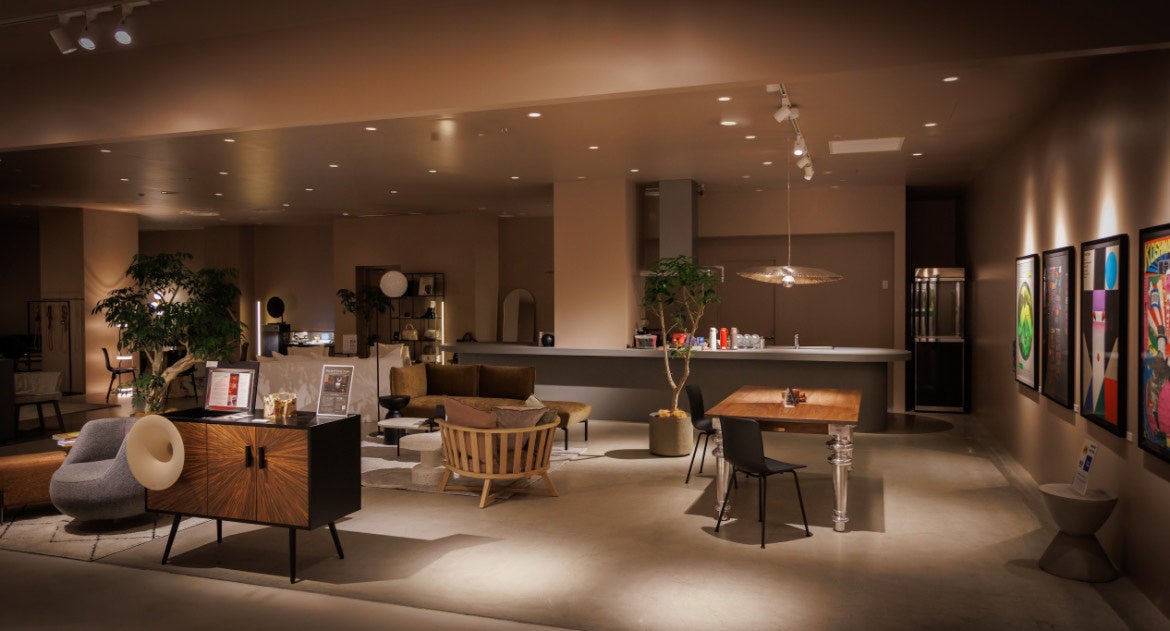
Provided spatial sound design as permanent BGM for the VIP-exclusive lounge. Received the evaluation that 'the space and music melted into one,' with improved customer satisfaction scores. In the art gallery section, reports noted that 'the sound elevated the sense of luxury and drove purchases.'
NY Textile Month 2024
"Woven by Fate" (24bit/96kHz) — Soundscape Adoption
A soundscape integrating 100-year-old Japanese loom recordings through the Groove Healing Method. Visitors shared that they 'felt transported to the crafting process behind this historic brand's garments,' while brand staff themselves said 'the sound made us notice something, and renewed our feeling for our own brand.'
06 — Catalog
10 Tracks — Sync & Master License Available
All tracks available in stereo (24bit/48kHz WAV) and high-resolution master (24bit/192kHz WAV). Custom production also available.
Within 48 hours, we provide track candidates suited to your project along with high-resolution previews. For mix and editing requests, a quote is provided after reviewing your submitted materials.
03
Agreement & Delivery
Upon agreement, broadcast-quality files (24bit/192kHz) are delivered. Both sync license and master license are held by ONTSUBU LLC.
Available License Types
種別
内容
Sync License
The right to synchronize music with visual content (film, TV, advertising, digital)
Master License
The right to use this specific recording (master)
Non-Exclusive License
Standard. Available for use across multiple projects
Exclusive License
Dedicated to a specific project or brand. Price on request
References
North, A.C., Hargreaves, D.J., & McKendrick, J. (2008). Music and brand memory research. University of Leicester. · Russell, J.A. (1980). A circumplex model of affect. Journal of Personality and Social Psychology, 39(6), 1161–1178. · Salimpoor, V.N., et al. (2011). Anatomically distinct dopamine release. Nature Neuroscience, 14(2). · Wilkie, H. & Harrison, P. (2025). Reverberation Time and Musical Emotion. Music Perception, 42(4). · Davidson, R.J. & Lutz, A. (2008). Psychological Bulletin, 134(1). · Vigeant, M. & Lawless, M.S. (2015). Journal of the Acoustical Society of America. · Ekman, P. (1992). Basic emotions. Handbook of Cognition and Emotion.